Published 8 August 2026 | 5 Minutes Read
Why Your Website Gets Traffic
but No Enquiries: A Conversion
Focused Website Design Guide
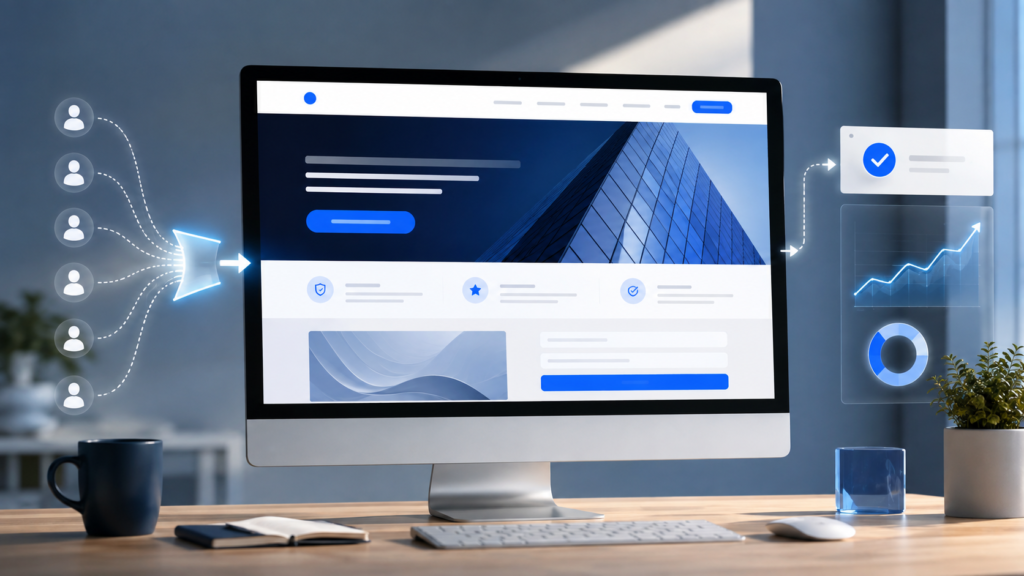
Getting visitors to your website is an important achievement, but traffic alone does not grow a business. The real value of a website lies in its ability to convert those visitors into enquiries, calls, bookings, store visits, or sales. If hundreds of people are visiting your website every month but very few are contacting you, the problem may not be your marketing. It may be your website design.

Aadhila Zakkari
Technical Content Developer at Glads.
Many business websites are created mainly to look attractive. They feature elegant colours, modern layouts, animations, and professional images, but fail to guide visitors towards a meaningful action. A conversion-focused website balances visual appeal with strategy. It understands what visitors are searching for, communicates the business’s value clearly, builds confidence, and makes taking the next step effortless.
Why Website Traffic Does Not Always Generate Enquiries
Website visitors usually arrive with a question, problem, or specific requirement. They may want to understand your services, compare your business with competitors, check your previous work, or decide whether you are trustworthy. Your website has only a short time to give them the right information and convince them to continue.
If visitors cannot immediately understand what your business offers, who it serves, and why they should choose it, they are likely to leave. Even a beautifully designed website can lose potential customers when its messaging is unclear or its structure is confusing.
This is why good website design is about more than appearance. It combines branding, content, user experience, technology, SEO, and conversion strategy to create a smooth journey from initial interest to enquiry.
Your Website Does Not Communicate Its Value Clearly
The first section of your website should answer three questions almost instantly: what do you offer, who is it for, and what should the visitor do next?
Statements such as “Welcome to our website” or “We provide innovative solutions” take up valuable space without communicating anything specific. Visitors should not have to scroll through multiple sections to understand your services.
A stronger opening message focuses on the customer’s need and the result your business provides. For example, a website design company could communicate that it creates conversion-focused business websites that increase visibility and generate qualified enquiries. This is clearer than simply stating that it offers creative digital solutions.
Clear messaging helps the right visitors recognise that they have reached the right business. It also filters out unsuitable enquiries by setting accurate expectations from the beginning.
Your Website Design Looks Outdated or Unprofessional
People naturally judge a business by the quality of its digital presence. An outdated website, inconsistent colours, poor-quality images, misaligned sections, or difficult-to-read typography can create doubts about the quality of the business itself.
Professional website design establishes credibility before a visitor speaks to your team. The layout should feel organised, the visual identity should remain consistent, and every design choice should support the brand’s position. A premium business, for example, needs a website that visually communicates expertise, quality, and attention to detail.
Modern design does not mean adding excessive animation or complicated effects. In many cases, clean layouts, strong typography, strategic use of space, relevant imagery, and clear calls to action create a more powerful impression.
Visitors Cannot Find the Information They Need
Confusing navigation is one of the most common reasons visitors leave a business website. If people cannot easily locate your services, portfolio, pricing information, contact details, or company background, they may choose a competitor whose website provides a simpler experience.
Your navigation should use familiar and descriptive labels. Important pages should be accessible within a few clicks, and related information should be grouped logically. The visitor should always understand where they are, what they can explore next, and how they can contact the business.
A well-planned website structure also supports SEO. When services are organised into dedicated pages with clear internal links, search engines can understand the website more effectively and display relevant pages for specific searches.
Your Calls to Action Are Weak or Missing
A visitor may be interested in your service but still leave without making contact if the website does not clearly suggest the next step. Every important page should contain a visible and relevant call to action.
Generic buttons such as “Submit” or “Click Here” do not communicate much value. More specific calls to action, such as “Request a Free Consultation,” “Get a Custom Quote,” “Schedule a Strategy Call,” or “Review Your Website,” tell visitors exactly what will happen when they click.
The call to action should also match the visitor’s level of interest. Someone reading an educational blog may not be ready to purchase immediately, but they may be willing to request an audit, download a guide, view a case study, or start a WhatsApp conversation. Providing an appropriate next step can turn an anonymous visitor into a genuine prospect.
Your Website Does Not Build Enough Trust
Visitors rarely enquire after reading only a list of services. They need evidence that your business can deliver what it promises.
Trust can be developed through authentic testimonials, detailed case studies, client logos, portfolio examples, certifications, team profiles, business credentials, and measurable results. These elements reduce the perceived risk of contacting or hiring your company.
A case study is especially valuable because it shows how your business approaches real challenges. Instead of simply saying that you provide excellent results, explain the client’s problem, your solution, and the outcome. Specific evidence is far more persuasive than broad promotional claims.
Trust signals should be placed throughout the website rather than limited to one testimonial page. A relevant client result displayed near a service section can influence the visitor at the exact moment they are evaluating that service.
Your Website Loads Too Slowly
Website speed has a direct impact on both user experience and search visibility. Visitors expect pages to load quickly, especially when browsing from mobile devices. Large images, unnecessary plugins, poorly written code, heavy animations, and low-quality hosting can make a website frustratingly slow.
When a page takes too long to load, visitors may leave before seeing your offer. This increases bounce rates and reduces the number of opportunities generated from your marketing campaigns.
Improving speed may involve compressing images, using modern image formats, removing unnecessary scripts, reducing plugin dependence, enabling caching, and choosing reliable hosting. Website speed should be considered during the design and development process rather than treated as an optional improvement after launch.
The Mobile Experience Is Poor
A large percentage of customers now discover businesses through smartphones. A website that works properly on a desktop but feels difficult to use on a smaller screen can lose a significant number of potential enquiries.
Mobile-friendly website design requires more than shrinking the desktop layout. Text should remain readable, buttons should be easy to tap, forms should be simple to complete, and important information should appear without excessive scrolling. Contact buttons, phone numbers, and WhatsApp links should be conveniently accessible.
The mobile version should be tested on different screen sizes and browsers. Every important interaction, from opening the menu to submitting an enquiry form, must work smoothly.
Your Enquiry Form Is Too Complicated
Long forms can discourage visitors, particularly during their first interaction with your business. Asking for too much information creates unnecessary friction and can make the enquiry process feel time-consuming.
A lead-generation form should request only the details necessary to start a conversation. In most cases, a name, phone number, email address, required service, and short message are enough. Additional information can be collected later by your sales team.
It is also important to communicate what happens after submission. A short message such as “Our team will contact you within one business day” gives the visitor confidence that the enquiry will be handled properly.
Forms should be tested regularly. A broken form, incorrect email configuration, missing confirmation message, or technical error can silently cost a business valuable leads.
Your Content Focuses Only on the Business
Many websites speak almost entirely about the company. They repeatedly use phrases such as “we provide,” “we believe,” and “we are committed,” while giving little attention to what the customer actually wants.
Effective website content connects services with customer problems and desired outcomes. Instead of merely listing technical features, explain how those features benefit the buyer. A responsive website, for instance, is valuable because it gives potential customers a seamless experience across devices. SEO-friendly development matters because it helps the business become more visible to people searching for its services.
Customer-focused content makes the visitor feel understood. It changes the website from a digital company profile into a useful sales and communication platform.
Your Website Attracts the Wrong Audience
High traffic is not always valuable traffic. A website can receive thousands of visits and still produce very few enquiries if it ranks for irrelevant keywords or reaches people who are unlikely to become customers.
An effective SEO strategy should focus on search intent, not just search volume. A business offering professional website design in Kerala will benefit more from visitors searching for a website design company than from people looking for free website templates or beginner coding tutorials.
Service pages should target commercially relevant keywords while blog posts can answer the questions potential customers ask before making a decision. This combination helps the website attract visitors at different stages of the buying journey and guide them towards the appropriate service.
There Is No Clear Customer Journey
A conversion-focused website should guide visitors through a logical journey. They may first discover the business through a blog post, move to a relevant service page, review previous projects, read testimonials, and then submit an enquiry.
When pages operate independently without internal links or clear next steps, visitors can reach a dead end. Every page should encourage continued exploration through relevant links, case studies, related services, or calls to action.
The journey should also reflect different types of visitors. Someone who already knows what they need may want to request a quote immediately, while another person may need to review your expertise and results before making contact. Good website design supports both behaviours.
How Conversion-Focused Website Design Generates Better Leads
Conversion-focused website design begins with understanding the business, its customers, its competitive position, and its sales process. The objective is not simply to increase the number of form submissions. It is to generate more relevant and qualified opportunities.
Clear positioning attracts the right audience. Helpful content answers common questions. Strong visual design builds credibility. Case studies provide evidence. Simple navigation makes information accessible. Strategic calls to action guide visitors forward. Fast performance and mobile responsiveness remove technical barriers.
When these elements work together, the website becomes an active part of the sales process. It educates potential customers, establishes trust, handles initial objections, and encourages action even when your team is unavailable.
How to Improve a Website That Is Not Generating Enquiries
Start by reviewing your website from the perspective of a first-time visitor. Check whether the homepage clearly communicates your core service and target audience. Review the navigation, service pages, mobile experience, page speed, calls to action, enquiry forms, testimonials, case studies, and contact options.
Website analytics can reveal where visitors are leaving, which pages receive the most attention, and which marketing channels bring valuable traffic. Search Console can help identify the keywords attracting users, while heatmaps and session recordings can show how visitors interact with individual pages.
The findings should then be converted into practical improvements. Sometimes a complete website redesign is necessary. In other cases, stronger copy, clearer calls to action, better forms, improved service pages, and technical optimisation may be enough to produce a significant difference.
A Good Website Should Support Business Growth
Your website should do more than establish an online presence. It should help people discover your business, understand its value, trust its capabilities, and take the next step.
If your website receives traffic but generates few enquiries, increasing the advertising budget may not solve the underlying problem. Sending more visitors to a weak website can simply increase wasted marketing expenditure. Improving the website’s ability to convert should be a priority before investing heavily in additional traffic.
Strategic website design turns visibility into opportunity. It connects branding, content, user experience, SEO, and lead generation to create a digital platform that contributes directly to business growth.
Turn Your Website Traffic into Qualified Enquiries with Glads
Glads creates conversion-focused websites for startups, SMEs, and established businesses that want more than an attractive online presence. Our approach combines strategic website design, clear brand communication, SEO-friendly development, responsive performance, and purposeful user journeys to help businesses attract the right audience and generate better enquiries.
If your existing website receives visitors but does not produce meaningful business opportunities, Glads can help identify what is limiting its performance.
Request a website performance review from Glads and discover how your website can become a stronger lead-generation platform.
Frequently Asked Questions
Why is my website getting traffic but no enquiries?
Your website may be attracting the wrong audience, communicating its offer poorly, loading slowly, lacking trust signals, or making it difficult for visitors to contact you. Reviewing both traffic quality and website conversion experience can help identify the exact problem.
What is conversion-focused website design?
Conversion-focused website design is the process of creating a website that strategically guides visitors towards actions such as submitting an enquiry, calling the business, booking a consultation, or making a purchase. It combines design, content, user experience, SEO, and conversion strategy.
How can website design improve lead generation?
Professional website design improves lead generation by making services easier to understand, strengthening credibility, simplifying navigation, presenting clear calls to action, and reducing obstacles in the enquiry process.
How many calls to action should a website have?
There is no fixed number, but every important page should provide a clear next step. The calls to action should be relevant to the content and should not compete with too many unrelated options.
Should I redesign my website if it is not generating leads?
A complete redesign may be necessary if the website is outdated, slow, difficult to navigate, poorly structured, or inconsistent with your current brand. If the foundation is strong, targeted improvements to content, calls to action, landing pages, forms, and technical performance may be sufficient.
How long does it take for a new website to generate enquiries?
The timeline depends on existing traffic, competition, SEO strength, marketing activity, and the sales cycle. Conversion improvements can produce results from existing visitors relatively quickly, while organic growth through SEO usually requires consistent effort over a longer period.
Let's Build Your
Website!
You May Also Like
-
Why Your Business Needs Branding Before Digital Marketing?
-
Why Your Website Gets Traffic but No Enquiries: A Conversion-Focused Website Design Guide.
-
Why Most Business Websites Don’t Generate Leads: How Smart Website Design Can Fix It?
-
Shopify Website Development: What Does a High-Converting Online Store Really Need?
-
Why a Strong Brand Identity Is Essential for Business Growth?